
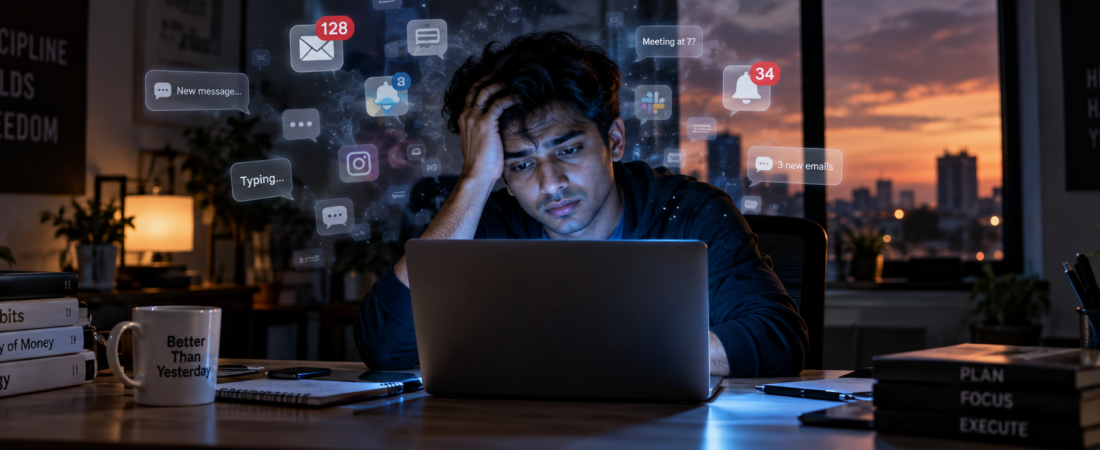
Digital overload happens when your brain takes in more screens, notifications, and digital decisions than it can process — leaving you mentally foggy, irritable, and wiped out even after a full night’s sleep. It’s not about willpower or discipline. It’s a nervous system response to nonstop input, and it’s become the default state for anyone working a hybrid or remote job. If you’ve ever closed your laptop at 6 PM and felt more exhausted than if you’d spent the day moving furniture, this is probably why.
Key Takeaways
- Digital overload is cognitive fatigue caused by too much screen input, switching, and notification interruption — not just “too much screen time.”
- Frequent technology checking can contribute to stress and mental overload, particularly when email, messages, and social media become sources of constant interruption. Research from the American Psychological Association has examined the relationship between frequent device checking and stress. American Psychological Association.
- Common signs include trouble focusing, irritability, eye strain, and feeling “wired but tired” by early evening.
- Recovery isn’t about quitting technology — it’s about reducing switching, protecting focus blocks, and giving your eyes and brain real rest.
- Small structural changes (batching notifications, screen-free transitions) tend to work better than willpower-based fixes like “just use your phone less.”
What Causes Digital Overload?
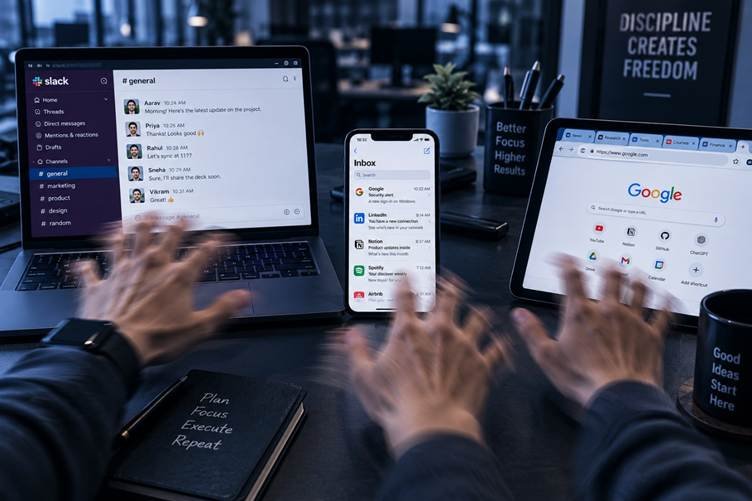
Digital overload isn’t caused by one bad habit. It’s the pileup of several small things that, individually, seem harmless.
Constant task-switching is one of the biggest contributors. Every time you flip from a Slack message to an email to a browser tab and back to your actual work, your attention has to shift between tasks. Research on “attention residue” suggests that when people switch away from an unfinished task, some attention can remain focused on the previous task, making it harder to fully concentrate on the next one. Leroy, 2009 — Attention Residue.
Other contributors stack on top of that:
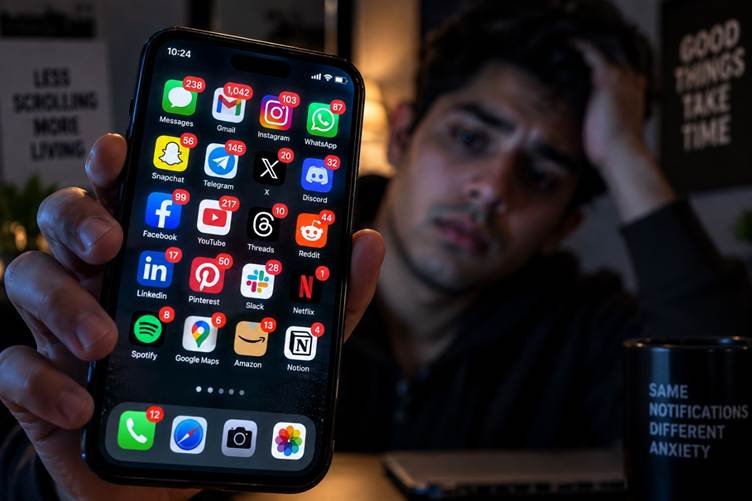
- Notification overload — every buzz, badge, and banner is a tiny demand for your attention, even if you don’t respond right away.
- Blue light and screen glare — this affects your eyes more than your brain, but eye strain makes everything feel harder, which reads as mental fatigue.
- Decision fatigue — endless scrolling and clicking means constant micro-decisions (reply now? later? ignore?), and those add up.
- Always-on work culture — remote and hybrid setups blur the line between “at work” and “off,” so your brain never fully downshifts.
- Passive scrolling — this one’s sneaky. It feels like rest, but algorithmic feeds are designed to keep triggering small dopamine hits, which is stimulating, not restful.
None of these is dramatic on its own. That’s exactly why digital overload sneaks up on people — it’s not one big thing, it’s fifty small things happening before lunch.
What Are the Signs of Digital Overload at Work?
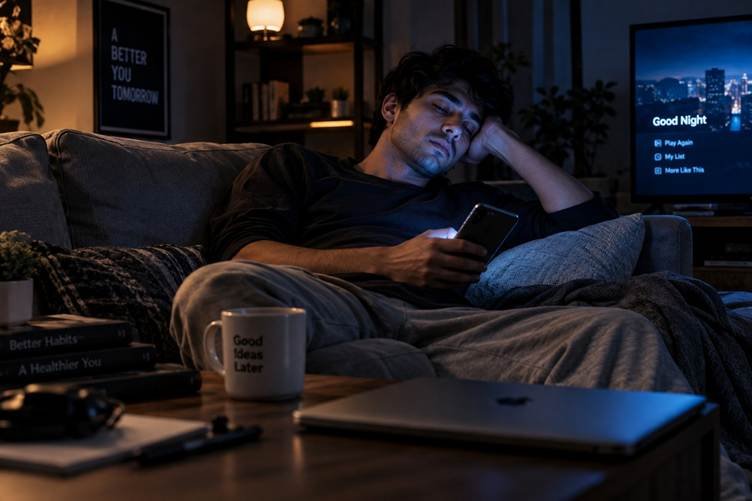
Here’s where it gets practical. Most people don’t clock digital overload as “digital overload” — they just think they’re bad at their job or losing motivation. If a few of these sound familiar, that’s worth paying attention to.
- You reread the same paragraph or email three times and still don’t absorb it.
- You feel irritable over small interruptions — a coworker’s message feels like an intrusion, not a normal part of the day.
- You get a “wired but tired” feeling by 4 or 5 PM — too keyed up to relax, too drained to be productive.
- Your eyes ache or feel gritty, and you get more headaches on heavy screen days.
- You check your phone without deciding to — it’s automatic, almost muscle memory.
- Simple decisions feel harder than they should, like picking what to eat for dinner suddenly takes real effort.
- You feel behind even when your inbox is empty, because there’s always another tab, app, or notification waiting.
If you’re nodding along to four or more of these, you’re not imagining it. That’s a real, physiological load — not a character flaw.
Why Does Screen Time Drain Your Energy?

This is the question people actually want answered: why does staring at a screen feel so much more tiring than, say, reading a physical book for the same amount of time?
Part of the problem is digital eye strain. Focusing on screens for extended periods can be associated with visual discomfort, dryness, and changes in blinking behavior. Reduced or incomplete blinking during screen use can contribute to dry-eye symptoms, adding to the physical discomfort people often experience after long periods in front of a screen. PubMed — Screen Use and Blinking.
But another important factor is cognitive load. A screen is rarely just one thing. It may contain an email, a chat thread, several open tabs, and notification badges competing for your attention. Working memory has limited capacity, and research has identified fundamental constraints on how much information people can actively maintain and process at once. When digital demands exceed those limits, it can become harder to maintain focused attention. Oberauer et al., 2016 — Working Memory Capacity.
Here’s my honest take: the popular advice to just “take more breaks” misses the point for a lot of people. A five-minute scroll break on your phone isn’t a break — it’s swapping one source of input for another. Real recovery means your eyes and your attention both get to disengage, not just your task list.
How to Recover From Digital Overload

You don’t need a digital detox retreat. You need a few structural changes that reduce how often your attention gets pulled around.
Batch your notifications. Turn off push alerts for anything that isn’t truly urgent, and check email or Slack in set windows — say, three times a day instead of fifty. This alone cuts a huge chunk of the switching cost.
Build a real screen-free transition. Don’t go straight from your last work tab to your phone on the couch. Even ten minutes of a walk, a shower, or just sitting without a screen gives your brain a chance to downshift instead of staying in “input mode” all evening.
Use the 20-20-20 rule for your eyes. The American Optometric Association recommends taking a 20-second break every 20 minutes to look at something about 20 feet away. This simple habit can help reduce the visual discomfort associated with prolonged screen use. American Optometric Association — 20-20-20 Rule.
Single-task on purpose. Close the extra tabs. Put your phone in another room during focused work blocks. This feels uncomfortable at first if you’re used to constant background noise, but it’s the single biggest lever for reducing mental fatigue.
Protect your evenings. If your job doesn’t require after-hours availability, act like it doesn’t — even if the habit of checking is strong. Consider a hard cutoff time for work apps, and consider whether your feeds are genuinely restful or just another form of input.
Get actual downtime. Not scrolling downtime — screen-off downtime. Reading, cooking, walking, talking to someone in person. Your brain needs input variety, and right now it’s probably starving for anything that isn’t a lit-up rectangle.
If your fatigue is severe, persistent, or paired with other symptoms like disrupted sleep, low mood, or anxiety that doesn’t improve with these changes, it’s worth talking to a doctor. Chronic fatigue can have several causes, and digital overload is only one possibility.
Related Reading
[Internally link to: article on remote work burnout recovery]
[Internally link to: stress management for hybrid workers]
FAQ
What is digital overload?
Digital overload is mental fatigue caused by too much screen input — constant notifications, task-switching, and passive scrolling — rather than simple “too much screen time.”
What causes digital overload?
The main causes are frequent task-switching, notification interruptions, decision fatigue from constant micro-choices, and always-on work culture that blurs the line between work and rest.
What are the signs of digital overload at work?
Common signs include trouble focusing, irritability at small interruptions, eye strain, feeling “wired but tired,” and reaching for your phone automatically without deciding to.
Why does screen time drain your energy so much?
It’s mostly cognitive, not visual — your brain has limited working memory, and juggling multiple digital inputs (tabs, chats, alerts) at once exceeds that limit, leaving you scattered and tired.
How long does it take to recover from digital overload?
There is no fixed recovery timeline for digital overload. How quickly you feel better can depend on your screen habits, workload, sleep, stress levels, and how consistently you reduce unnecessary digital interruptions. If fatigue remains severe or persistent despite making changes, consider speaking with a healthcare professional.