

If you’ve picked up your phone twelve times in the last hour without meaning to, this is for you. Learning how to start a digital detox doesn’t mean deleting every app and disappearing to a cabin for a week. It means setting a few specific, sustainable limits around your phone so you can actually finish a thought, sleep better, and stop feeling like you’re on call 24/7.
Most digital detox advice is written for people with no job and no kids. This one isn’t.
Key Takeaways
- A digital detox is a set period of intentionally reduced screen and app use — not a total ban on technology.
- Common signs of phone addiction include reaching for your phone the second you feel bored, phantom vibration sensations, and anxiety when your battery drops below 20%.
- The most realistic digital detox schedule for stressed adults starts with 2-3 short daily windows, not a full week off-grid.
- Small, specific rules (“phone charges outside the bedroom”) work better long-term than vague goals (“use my phone less”).
- You don’t need to quit social media. You need boundaries you’ll actually keep on a Tuesday at 4pm when work is stressful.
What Is a Digital Detox, Really?
A digital detox is a deliberate break from phones, social media, or screens in general, done for a set amount of time to lower stress and reset your habits around technology. It can last an hour, a weekend, or longer, and it doesn’t require you to go offline completely.
Here’s where a lot of people get tripped up: they picture a digital detox as an all-or-nothing event, like a juice cleanse for your attention span. That’s not really how it works for most adults with jobs.
A working professional’s version usually looks more like this: no phone during the first 30 minutes after waking up, no email after 7pm, and one full screen-free evening a week. Small, repeated, boring. That’s the part nobody puts in the Instagram caption, but it’s the part that actually changes anything.
Research on smartphone use and wellbeing has linked heavy, compulsive checking behavior with higher reported stress and lower sleep quality [PubMed — Smartphone use at night, sleep quality and psychological well-being]. That doesn’t mean your phone is evil. It means the pattern of constant, reactive checking is the problem, not the device itself.
Signs of Phone Addiction You Shouldn’t Ignore

“Addiction” is a strong word, and honestly, most people who feel stuck to their phone don’t meet a clinical definition of addiction. But the behavior pattern is real enough that it’s worth naming. Here are the signs that show up most often in working adults:
- You check your phone within 5 minutes of waking up, before you’ve even gotten out of bed.
- You feel a flash of anxiety when you leave the house without it, even for a five-minute walk.
- You experience “phantom vibrations” — feeling your phone buzz when it didn’t.
- You lose track of time on apps you didn’t intend to open for more than a minute or two.
- You use your phone to avoid discomfort — silence, boredom, an awkward conversation, a hard task at work.
- Your sleep has gotten worse since you started scrolling in bed, and you know it’s connected but keep doing it anyway.
If three or more of these sound like you, that’s your sign to start, not a reason to feel bad about yourself. Nearly everyone with a smartphone and a stressful job has some version of this.
One thing I’ll push back on: a lot of “phone addiction quizzes” online are designed to make almost anyone feel like they have a serious problem, mostly so the site can sell you a course. You probably don’t need therapy for your phone use. You probably do need better defaults.
How to Start a Digital Detox in 5 Steps
This is the part people actually want — the how, not just the why. Here’s a version of how to start a digital detox that’s built for someone with a 9-to-5, a commute, and maybe a kid pulling on their sleeve.
- Track your real screen time for 3 days before you change anything. Use your phone’s built-in screen time report (Settings on iPhone, Digital Wellbeing on Android). Don’t judge it yet. Just look.
- Pick one specific window to protect first. Not “less phone” — something concrete, like the first 30 minutes after waking up, or the hour after dinner. One window, not five.
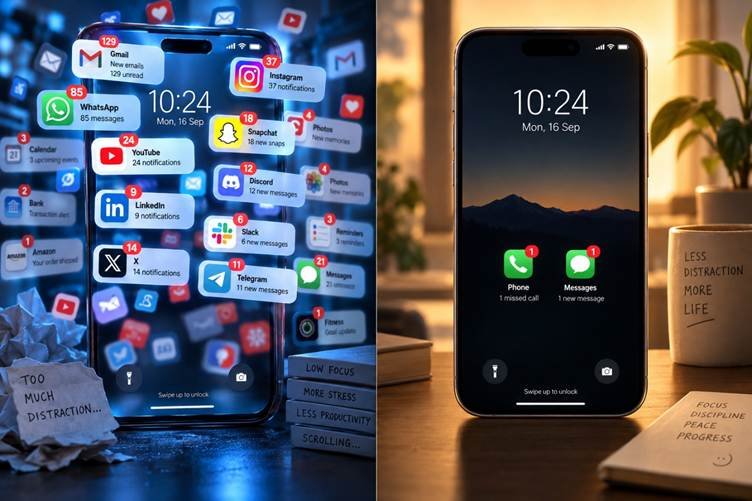
- Turn off non-human notifications. Keep texts and calls from real people; kill everything else — app badges, news alerts, promotional pings. This single step usually cuts daily pickups more than any willpower trick will.
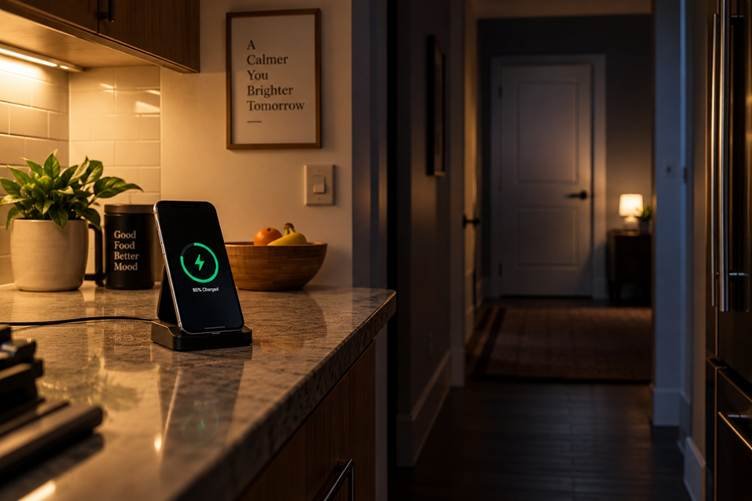
- Create one physical barrier. Charge your phone in the kitchen overnight instead of your nightstand. Leave it in a bag during dinner. Friction works better than intention.
- Schedule a longer detox block once the small habit sticks — a screen-free Saturday morning, or a no-phone dinner three nights a week. Build up from the daily win, don’t start here.
Notice what’s missing from that list: “delete all your apps” and “buy a dumb phone.” Those work for some people. For most working professionals, they don’t stick past day four, because the phone is also how you clock in, get directions, and pay for parking.
What Does a Realistic Digital Detox Schedule Look Like for Stressed Adults?
A digital detox schedule doesn’t need to be dramatic to work. In fact, the more dramatic it is, the more likely you are to abandon it by Thursday. Here’s a sample week that’s actually doable around a full-time job:
Monday–Friday
- No phone for the first 30 minutes after waking up.
- Phone on Do Not Disturb during focused work blocks (try 90 minutes at a time).
- No phone at the dinner table.
- Charger lives outside the bedroom.
Wednesday evening
- One screen-free hour after work — a walk, cooking without a podcast, anything that isn’t a screen.
Saturday morning
- Phone stays off (or in another room) until 10am.
Sunday
- One “low digital” afternoon: no social media, texts and calls only.
That’s it. No week-long silent retreat, no digital detox camp. Research suggests that substantially reducing recreational digital screen use for two weeks may improve mental well-being and mood. [Nature — Effects of limiting digital screen use on well-being, mood and stress].
[Internally link to: article on managing stress and burnout for working professionals]
Digital Detox Tips for Busy Professionals

A few things that make this realistically sustainable, based on what tends to actually work versus what sounds good in theory:
- Batch your notifications instead of banning them. Check email and Slack at set times (say, 9am, 1pm, 4pm) instead of leaving them open all day. You’ll respond just as fast in practice, and your nervous system gets long stretches of quiet in between.
- Use grayscale mode during your “off” hours. Turning your screen black and white makes apps noticeably less compelling — a lot of the pull is visual dopamine, and gray just isn’t as fun to look at.
- Tell one person about your boundary. If your manager or partner knows you’re off Slack after 7pm, you’ll actually hold the line instead of quietly checking “just this once.”
- Replace the habit, don’t just remove it. If you always scroll during your commute, swap it for a podcast or an audiobook — something that fills the same slot without the same pull.
- Expect the first 3-4 days to feel a little uncomfortable. That restless, itchy feeling when you can’t check your phone is normal and it fades. It’s not a sign you’re doing it wrong.
Common Mistakes People Make When Starting a Digital Detox
I’ll be honest about something most articles on this topic skip: going too big, too fast is the number one reason digital detoxes fail. People decide to quit social media entirely on a Monday and are back on Instagram by Wednesday night, feeling like they failed. They didn’t fail — the plan was just unrealistic for their actual life.
Other common mistakes:
- Deleting apps without changing the underlying habit. You’ll just redownload them, or replace scrolling with something equally distracting.
- Doing it alone with no accountability, then quietly giving up when nobody notices.
- Picking a detox schedule that conflicts with your actual job. If your role requires being reachable, a “no phone all day” rule is setting yourself up to break your own rule and feel bad about it.
- Treating it as a one-time event instead of an ongoing practice. A single detox weekend feels great and then evaporates by the following Tuesday if you don’t keep any of the habits.
Do You Actually Need a Full Digital Detox — or Just Better Boundaries?
Here’s my honest take, and it might go against what you’d expect from an article about digital detoxing: most people don’t need a dramatic detox. They need three or four specific, boring rules they actually keep.
The wellness industry loves the idea of a total reset — the retreat, the digital sabbath, the flip phone experiment. Those can be genuinely useful for some people, especially if you’re feeling completely burned out. But for most working adults, the bigger win comes from small, repeatable boundaries: phone out of the bedroom, notifications off, one screen-free evening a week. That’s less exciting to write about, but it’s what actually survives contact with a real Tuesday.
If constant phone use is tied into something heavier — trouble sleeping, ongoing anxiety, or using your phone specifically to avoid feelings you don’t want to sit with — that’s worth talking to a doctor or therapist about. A digital detox can help with day-to-day overwhelm, but it isn’t a substitute for mental health support when you need it. [ American Psychological Association — anxiety disorders]
FAQ
How long should a digital detox last?
There’s no fixed rule. Even a single screen-free evening can help you feel less scattered, and many people notice a bigger shift after sticking with small daily limits for one to two weeks.
Is it bad to check my phone first thing in the morning?
It’s not “bad” in a moral sense, but starting your day reacting to notifications, before you’ve had a coffee or a quiet moment, tends to set a stressed, reactive tone for the rest of the day. Delaying it by even 15-30 minutes can help.
Do I need to delete social media apps to do a digital detox?
No. Deleting apps works for some people, but for most, turning off notifications and setting specific check-in windows is more sustainable and easier to maintain long-term.
What’s a good digital detox schedule if I have a demanding job?
Start with one protected window a day (like the first 30 minutes after waking, or your commute) and one screen-free evening a week. Build from there instead of trying to overhaul everything at once.
How do I know if I actually have a phone addiction, or just a bad habit?
Most people fall into “bad habit,” not clinical addiction. If your phone use is interfering with sleep, relationships, or work — or you’ve tried to cut back and genuinely can’t — it’s worth discussing with a doctor or therapist rather than trying to self-diagnose.