

Can vitamin D prevent osteoporosis? On its own, probably not, at least for women who already have adequate vitamin D levels. Vitamin D is essential for calcium absorption and normal bone health. However, large clinical trials have found that taking extra vitamin D does not meaningfully reduce fractures in generally healthy adults who were not selected for vitamin D deficiency. The large VITAL fracture trial found that 2,000 IU of vitamin D3 daily did not significantly reduce total, hip, or nonvertebral fractures compared with placebo. VITAL fracture trial USPSTF fracture-prevention recommendation.
Vitamin D is most clearly useful when it corrects a deficiency. This article explains what the research shows, who is more likely to run low, how much vitamin D official guidelines recommend in the US, UK, Canada, and Australia, and what else protects your bones after menopause.
Key Takeaways
- Vitamin D supports bones mainly by helping you absorb calcium. Without enough of it, your body absorbs only a fraction of the calcium you eat.
- Extra vitamin D doesn’t prevent fractures in people with adequate levels. A large US trial giving 2,000 IU (50 mcg) daily found no reduction in fractures among generally healthy adults over 50.
- US adults up to age 70 need 600 IU (15 mcg) of vitamin D a day, and adults over 70 need 800 IU (20 mcg). The tolerable upper intake level for adults is 4,000 IU (100 mcg) per day. This upper limit is a safety ceiling, not a recommended target. NIH Office of Dietary Supplements — Vitamin D Fact Sheet].
- A blood level of 20 ng/mL (50 nmol/L) or higher is considered adequate for bone health in most people, according to the US National Academies.
- Very high single doses may backfire. One trial of a large yearly dose found more falls and fractures, not fewer.
- Bone density screening is recommended for women 65 and older, and earlier for postmenopausal women with risk factors.
What Vitamin D Actually Does for Your Bones
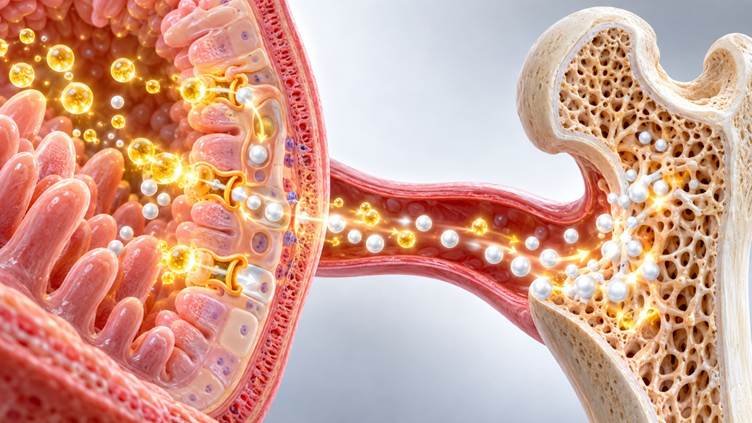
Vitamin D works more like a gatekeeper than a building material. Calcium and phosphorus are the minerals that make bone hard, and vitamin D controls how well your intestines absorb them.
When vitamin D is low, your body absorbs less calcium. To keep blood calcium in a safe range, it pulls calcium out of your skeleton. Over time, this can weaken bones. Severe, long-term deficiency in adults can cause osteomalacia, a condition in which bones become soft because they can’t mineralize properly.
Osteoporosis is different. It’s a loss of bone mass and structure that makes bones porous and fragile, and it has many causes, including aging, genetics, and the drop in estrogen that comes with menopause. Vitamin D is one piece of that picture, not the whole thing.
Why menopause changes the equation
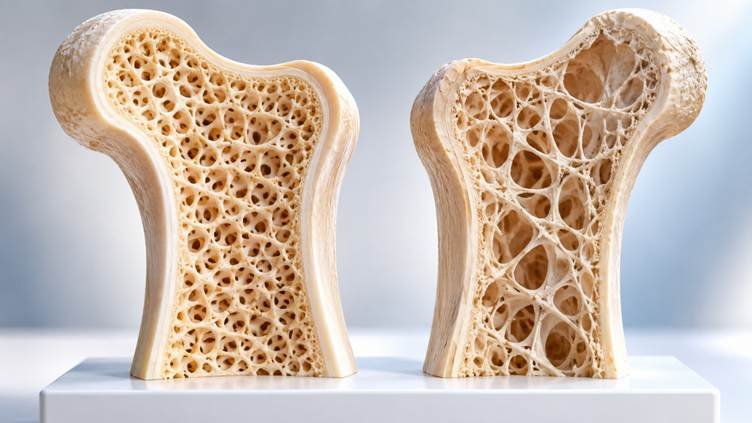
Estrogen helps slow the natural breakdown of bone. When estrogen levels fall during menopause, bone loss accelerates, particularly during the early postmenopausal years. A prospective study following women through the menopausal transition found that bone loss was greatest around menopause and slowed during the later postmenopausal period. Prospective menopause and bone-loss study — PubMed
This is why vitamin D after menopause gets so much attention. Your bones are under more pressure, so a deficiency that might have caused little trouble earlier in life can matter more later. Still, correcting low vitamin D does not replace the protective effects of estrogen and cannot stop age-related bone loss on its own.
What the Research Shows About Vitamin D and Osteoporosis
Researchers have studied vitamin D and bone health for decades. The evidence has become clearer in recent years, and in some ways it’s more modest than older headlines suggested.
Does vitamin D increase bone density?
For most people with adequate vitamin D levels, the answer appears to be no, or only by a very small amount. Meta-analyses have found that vitamin D supplements have little or no meaningful effect on bone mineral density at most skeletal sites in adults. A bone-density substudy of the large VITAL trial reached a similar conclusion: daily vitamin D supplementation did not significantly improve bone mineral density compared with placebo. VITAL bone-health study.
People who are truly deficient are a different group. Correcting a deficiency is expected to help bone mineralization, which is why doctors test and treat low levels.
Does vitamin D reduce fracture risk in older women?
Fractures are the outcome that matters most, since osteoporosis causes harm mainly through broken bones.
- Vitamin D alone: The VITAL trial followed 25,871 US adults—men aged 50 and older and women aged 55 and older—who were not selected for low vitamin D levels or osteoporosis. Participants taking 2,000 IU of vitamin D3 daily did not have a significantly lower risk of total, hip, or nonvertebral fractures than those taking placebo. LeBoff et al., NEJM 2022 — VITAL fracture trial.
- US Preventive Services Task Force (USPSTF): In 2018, the USPSTF recommended against daily supplementation with 400 IU or less of vitamin D combined with 1,000 mg or less of calcium for the primary prevention of fractures in postmenopausal women living in the community. The evidence was considered insufficient to determine the balance of benefits and harms for higher doses. USPSTF — Vitamin D and Calcium Supplementation.
- High-dose bolus doses: An Australian randomized trial gave 2,256 community-dwelling women aged 70 and older a single 500,000-IU dose of vitamin D each year. The vitamin D group experienced more falls and fractures than the placebo group. This finding is one reason experts caution against very large intermittent doses of vitamin D. Sanders et al., JAMA 2010.
Most of these trials enrolled people who, on average, already had adequate vitamin D levels. The results tell us that adding more on top of enough doesn’t seem to help. They don’t tell us that vitamin D is unimportant.
Vitamin D and calcium for osteoporosis: does the combination work?
The evidence for combined calcium and vitamin D is mixed. Some meta-analyses have found a modest reduction in hip fractures with the combination, mostly driven by studies in older people living in care facilities, who are more likely to be deficient. Trials in healthier, community-living adults, including the Women’s Health Initiative, have generally shown little or no benefit. USPSTF evidence review on vitamin D, calcium, and fracture prevention.
In practice, doctors commonly make sure patients have adequate calcium and vitamin D before and during osteoporosis medication. Some treatments, such as denosumab and intravenous zoledronic acid, can lower blood calcium, and a vitamin D deficiency raises that risk. This is a supporting role, and it’s one of the clearest reasons your doctor may check your level.
How strong is the evidence? A quick summary
| Claim | Evidence level |
| Vitamin D is required for calcium absorption and normal bone mineralization | Established |
| Correcting a deficiency supports bone health | Reasonably supported |
| Extra vitamin D prevents fractures in people with adequate levels | Not supported by large trials |
| Extra vitamin D increases bone density in people with adequate levels | Not supported (small or no effect) |
| Calcium plus vitamin D reduces hip fractures in frail or institutionalized older adults | Some supporting evidence, mixed |
| Very large yearly or intermittent doses may increase falls and fractures | Emerging, based on limited trials |
How Much Vitamin D Do You Need?
Recommendations differ between countries. The reasons include different sunlight exposure, different committees reviewing the evidence, and different goals. Some guidelines aim to meet the needs of nearly everyone, while others set a minimum to prevent deficiency.
Vitamin D recommendations in four countries
| Country | Daily recommendation for women 45+ | Upper limit (adults) | Notes |
| US (NIH, National Academies) | 600 IU (15 mcg) to age 70; 800 IU (20 mcg) age 71+ | 4,000 IU (100 mcg) | RDA covers nearly all healthy people |
| UK (NHS, SACN) | 400 IU (10 mcg), especially in autumn and winter; year-round for people with little sun exposure | 4,000 IU (100 mcg) | Assumes some summer sun |
| Canada (Health Canada) | 600 IU (15 mcg) to age 70; 800 IU (20 mcg) age 71+ | 4,000 IU (100 mcg) | Same reference values as the US; Osteoporosis Canada may advise different amounts |
| Australia (NHMRC) | 400 IU (10 mcg) age 51–70; 600 IU (15 mcg) age 71+ | 3,200 IU (80 mcg) | Values are Adequate Intakes, not RDAs |
[Sources: NIH Office of Dietary Supplements — Vitamin D · NHS — Vitamin D · Health Canada — Dietary Reference Intakes · Australian Government — Nutrient Reference Values]
A few terms help make sense of this table. The RDA (Recommended Dietary Allowance) is the amount that meets the needs of about 97–98% of healthy people. An Adequate Intake is used when there isn’t enough evidence to set an RDA. The upper limit is the most you can take daily over the long term without an expected risk of harm, and it isn’t a target.
These amounts are for healthy people. If you’re diagnosed with a deficiency, your doctor may recommend a higher treatment dose for a limited time and then a lower maintenance dose. That’s a medical decision based on your blood test, not a general recommendation.
What blood test results mean
Your doctor can measure vitamin D with a blood test for 25-hydroxyvitamin D, often written as 25(OH)D. US labs usually report results in ng/mL. The UK, Canada, and Australia usually use nmol/L.
| Level | ng/mL | nmol/L | US National Academies interpretation |
| Deficient | Below 12 | Below 30 | Linked to rickets in children and osteomalacia in adults |
| Possibly inadequate | 12–19 | 30–49 | May be too low for bone health in some people |
| Adequate | 20 or higher | 50 or higher | Enough for bone health in most people |
| Possibly too high | Above 50 | Above 125 | Linked to potential adverse effects |
Not every organization uses the same cut-offs. The Endocrine Society’s 2011 guideline used 30 ng/mL (75 nmol/L) as a target, while its 2024 guideline moved away from recommending specific target levels and advised against routine testing in healthy adults under 75. The NHS generally treats levels below 25 nmol/L (10 ng/mL) as deficient. If your result falls in a gray zone, ask your doctor which standard they’re using. NIH Office of Dietary Supplements — Vitamin D.
Are You at Risk of Low Vitamin D?
You can’t tell your vitamin D level from symptoms alone. Mild deficiency often causes no noticeable symptoms. These factors make low levels more likely:
- Limited sun exposure, such as spending most time indoors, covering most of your skin, or living far from the equator, especially in winter
- Darker skin, which produces less vitamin D from the same amount of sunlight
- Older age, because skin becomes less efficient at making vitamin D
- Higher body weight, since vitamin D is stored in fat tissue and less may circulate in the blood
- Conditions that affect fat absorption, such as celiac disease, Crohn’s disease, or a history of weight-loss surgery
- Liver or kidney disease, which can interfere with converting vitamin D to its active form
- Certain medications, including some anti-seizure drugs and long-term glucocorticoids such as prednisone
If several of these apply to you, or you’ve been diagnosed with osteopenia or osteoporosis, a blood test is a reasonable conversation to have with your doctor.
Getting vitamin D from food

Few foods are naturally rich in vitamin D, which is why sunlight and fortified foods matter. Good sources include fatty fish such as salmon, trout, and sardines, fortified milk and plant milks, fortified cereals, egg yolks, and mushrooms exposed to UV light. Most people find it hard to reach 600 IU from food alone, so it’s worth checking your diet with your doctor or a registered dietitian before assuming you need a supplement.
Can You Take Too Much Vitamin D?
Yes. Vitamin D toxicity is uncommon and almost always comes from supplements, not sunlight or food. Taking large amounts over time can raise blood calcium, which may cause nausea, weakness, confusion, kidney stones, and in serious cases kidney damage or irregular heart rhythms.
Vitamin D can also interact with medications, including thiazide diuretics, which can raise calcium levels further. People with certain conditions, such as sarcoidosis or a history of kidney stones, may need extra caution. Tell your doctor or pharmacist about any vitamin D supplement you take. NIH Office of Dietary Supplements — Vitamin D safety and interactions.
What Protects Your Bones Besides Vitamin D

Since vitamin D alone won’t prevent osteoporosis, it helps to look at the full set of habits and checks that matter.
Calcium. Women aged 51 and older in the US are advised to get 1,200 mg of calcium a day, ideally from food such as dairy products, fortified plant milks, canned fish with bones, and leafy greens. In the UK, the reference value for adults is 700 mg per day. More is not automatically better, and high-dose calcium supplementation may have risks. NIH Office of Dietary Supplements — Calcium · NHS — Vitamins and minerals.
Weight-bearing and muscle-strengthening exercise. Activities like brisk walking, stair climbing, dancing, and resistance training put healthy stress on bones and help maintain strength and balance, which lowers fall risk. If you already have osteoporosis, ask a doctor or physical therapist which movements are safe for you.
Bone density screening. A DXA scan measures bone mineral density and is commonly used to diagnose osteoporosis. The USPSTF recommends screening women aged 65 years or older and recommends screening postmenopausal women younger than 65 when their fracture risk is increased. Results are reported as a T-score. A score of −2.5 or lower indicates osteoporosis, while a score between −1.0 and −2.5 indicates low bone mass (osteopenia). USPSTF — Osteoporosis Screening.

Other habits. Not smoking, limiting alcohol, and eating enough protein all support bone health.
Medication, when appropriate. For women with osteoporosis or high fracture risk, prescription medications such as bisphosphonates have strong evidence for reducing fractures. These decisions belong with your doctor, and vitamin D is usually part of that plan rather than a substitute for it.
Questions to Ask Your Doctor
If your doctor suggested you “consider vitamin D,” these questions can help turn that into a clear plan:
- Should I have my vitamin D level tested, and what level are you aiming for?
- Given my age and risk factors, am I due for a bone density scan?
- Am I getting enough calcium from my diet, or do I need a supplement?
- If I need vitamin D, what dose should I take, and for how long?
- Could any of my current medications affect my vitamin D or bone health?
Frequently Asked Questions
Is vitamin D3 better than vitamin D2?
Both forms raise blood levels, but vitamin D3 (cholecalciferol) appears to raise and maintain them somewhat more effectively than vitamin D2 (ergocalciferol). D3 is the form most commonly found in supplements. Vegans may prefer D2 or a plant-based D3 made from lichen.
Should I take vitamin D with food?
Vitamin D is fat-soluble, so taking it with a meal that contains some fat may improve absorption. Taking it consistently matters more than the time of day.
Does vitamin D help prevent falls?
The evidence is mixed. Larger recent trials and reviews have generally not found that vitamin D supplements reduce falls in people who are not deficient. For older adults at increased risk of falls, exercise that improves strength and balance has stronger evidence for reducing fall risk. USPSTF — Interventions to Prevent Falls in Community-Dwelling Older Adults.
How long does it take to correct a vitamin D deficiency?
It usually takes several weeks to a few months of supplementation, depending on how low your level was and the dose your doctor prescribes. Doctors often recheck levels after a period of treatment.
Can I get enough vitamin D from the sun?
Many people make much of their vitamin D from sunlight in summer, but the amount varies widely with skin tone, age, latitude, season, and sunscreen use. Because sun exposure also raises skin cancer risk, health agencies don’t recommend deliberately seeking extra sun to boost vitamin D.
Putting It Together
Vitamin D matters for your bones, but it works as a foundation rather than a shield. If your levels are low, correcting them is worthwhile and supports the calcium absorption your skeleton depends on. If your levels are already adequate, research suggests extra vitamin D is unlikely to add further protection against osteoporosis or fractures.
For women navigating menopause and bone loss, the more useful approach is a complete one: know your vitamin D status, get enough calcium, stay active with weight-bearing and strength exercise, and ask your doctor whether a bone density scan makes sense for you. That combination, guided by your own test results, gives you far more than any single supplement can.