
Most adults need 600 IU (15 mcg) of vitamin D a day for bone health, rising to 800 IU (20 mcg) after age 70, according to US and Canadian guidelines. Health Canada Dietary Reference Intakes]. The UK recommends 10 mcg (400 IU) a day, and Australia’s official figures are lower because they assume some sun exposure. For bones, most health agencies consider a blood level of at least 20 ng/mL (50 nmol/L) adequate for nearly everyone.
So how much vitamin D do you need for bone health if you’re past menopause, over 70, or holding a blood test that says “insufficient”? This guide covers daily amounts by age and country, how to read your results, where the safety ceiling sits, and what the research does and doesn’t show about fractures.
Quick answer: Adults 19–70: 600 IU (15 mcg) daily. Adults 71+: 800 IU (20 mcg) daily (US/Canada). UK: 400 IU (10 mcg) daily for everyone over 4. Upper limit for most adults: 4,000 IU (100 mcg) daily in the US, UK, and Canada; 3,200 IU (80 mcg) in Australia. Blood level adequate for bone: 20 ng/mL (50 nmol/L) or higher.
Key Takeaways
- Menopause doesn’t change the official daily amount. The US recommendation stays at 600 IU until 71, though Canada now advises everyone over 50 to take at least a 400 IU supplement on top of food.
- The widely quoted “30 ng/mL” target is not a current consensus. It came from the Endocrine Society’s 2011 guideline, and the society’s 2024 update no longer endorses a specific target level.
- 2,000 IU a day sits below every upper limit covered here, but an upper limit is a safety ceiling, not a goal to aim for.
- In healthy adults with normal levels, vitamin D alone hasn’t been shown to prevent fractures. The clearest benefit is in people who are deficient or at high risk.
- Big, infrequent doses may backfire. A trial of a once-yearly 500,000 IU dose found more falls and fractures, not fewer.
How Vitamin D Supports Your Bones
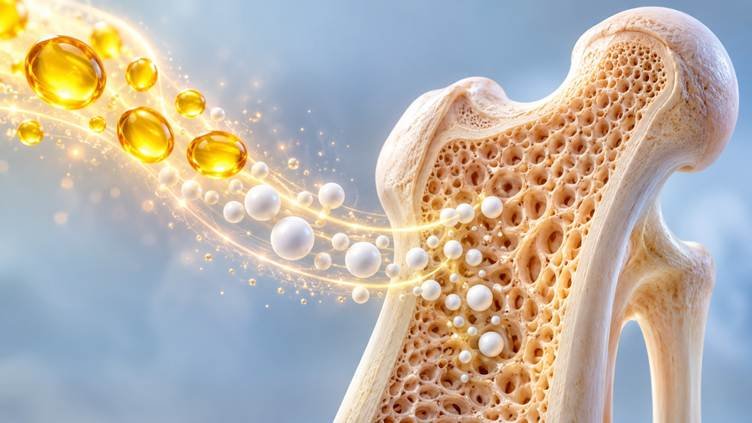
Vitamin D’s main job in bone health is helping your gut absorb calcium. Without enough of it, you absorb only a fraction of the calcium you eat, no matter how much dairy or how many fortified foods you consume.
When calcium absorption drops, your body raises parathyroid hormone (PTH) to keep blood calcium steady. PTH does this partly by pulling calcium out of your bones. Over time, that ongoing withdrawal can speed up bone loss.
Severe, long-term deficiency can cause osteomalacia, a softening of the bones that leads to bone pain and muscle weakness. This is different from osteoporosis, where bones become thin and fragile, although low vitamin D can contribute to both.
Daily Vitamin D Recommendations by Age
In the US and Canada, recommendations come from the National Academies (formerly the Institute of Medicine). They publish several different numbers, and mixing them up is a common source of confusion.
- EAR (Estimated Average Requirement): meets the needs of about half of healthy people.
- RDA (Recommended Dietary Allowance): meets the needs of nearly all healthy people (about 97.5%). This is the number most people should use.
- UL (Tolerable Upper Intake Level): the highest daily intake unlikely to cause harm. It is not a target.
| Age | EAR | RDA | UL |
| 19–50 | 400 IU (10 mcg) | 600 IU (15 mcg) | 4,000 IU (100 mcg) |
| 51–70 | 400 IU (10 mcg) | 600 IU (15 mcg) | 4,000 IU (100 mcg) |
| 71+ | 400 IU (10 mcg) | 800 IU (20 mcg) | 4,000 IU (100 mcg) |
These figures cover vitamin D from all sources combined—food, fortified products, and supplements—and the U.S. vitamin D RDAs are based on the assumption of minimal sun exposure. One microgram (mcg) of vitamin D equals 40 IU, so if your supplement label lists only mcg, multiply the number by 40. NIH Office of Dietary Supplements — Vitamin D Health Professional Fact Sheet
Vitamin D Guidelines: US vs UK vs Canada vs Australia

If you’ve read a British website and an American one on the same afternoon, you’ve probably seen numbers that don’t match. They aren’t contradicting each other so much as answering slightly different questions.
| Country | Adults under 70 | Adults over 70 | Upper limit (adults) | Blood level for bone |
| US (NIH/NASEM) | 600 IU (15 mcg) | 800 IU (20 mcg) | 4,000 IU (100 mcg) | ≥20 ng/mL (50 nmol/L) |
| Canada (Health Canada, Osteoporosis Canada) | 600 IU (15 mcg); over 50, include a supplement of at least 400 IU | 800 IU (20 mcg) | 4,000 IU (100 mcg) | [VERIFY: Canadian reference threshold] |
| UK (NHS/SACN) | 400 IU (10 mcg) | 400 IU (10 mcg) | 4,000 IU (100 mcg) | ≥25 nmol/L (10 ng/mL) |
| Australia (NHMRC; Healthy Bones Australia) | NHMRC: 200 IU (5 mcg) at 19–50, 400 IU (10 mcg) at 51–70. HBA: at least 600 IU with limited sun | NHMRC: 600 IU (15 mcg). HBA: at least 800 IU | 3,200 IU (80 mcg) | ≥50 nmol/L (20 ng/mL) at end of winter |
Why the numbers different
The UK’s 10 mcg figure was designed to keep almost everyone above 25 nmol/L through winter, when UK sunlight is too weak to make vitamin D. The US and Canada chose a higher blood threshold, 50 nmol/L, which naturally requires a higher daily intake.
Australia’s official Nutrient Reference Values (NRVs) for vitamin D were published in 2006, and the recommendations assume no or minimal exposure to sunlight because sun exposure varies widely between individuals. NHMRC is continuing an ongoing review of the Nutrient Reference Values, although the current vitamin D reference values remain those published in the existing NRV document. NHMRC — Nutrient Reference Values for Australia and New Zealand NHMRC — Review of Nutrient Reference Values.
In practice, if you live in one of these countries, follow your own country’s advice and your clinician’s. None of these figures is “wrong.” They reflect different blood-level targets and assumptions about sunlight. For a deeper side-by-side, see.
Vitamin D Dosage for Postmenopausal Women

There’s no separate official RDA for postmenopausal women. In the US, a 55-year-old woman has the same 600 IU (15 mcg) recommendation as a 30-year-old, until she turns 71.
That can feel counterintuitive, because bone loss speeds up in the years after menopause as estrogen falls. The reason the number doesn’t jump is that vitamin D doesn’t replace estrogen’s protective effect. It supports calcium absorption, and the RDA is already set to cover nearly everyone’s needs for that purpose.
Some organizations do recommend more from midlife onward:
- Canada: adults over 50 should take a minimum 400 IU vitamin D supplement daily in addition to vitamin-D-rich foods, to help meet the 600 IU RDA for ages 51–70 or the 800 IU RDA after age 70. Osteoporosis Canada — 2023 Clinical Practice Guideline
- U.S.: the Bone Health & Osteoporosis Foundation recommends 800–1,000 IU of vitamin D daily for adults age 50 and older. Bone Health & Osteoporosis Foundation — Vitamin D recommendations.
Calcium needs do change around menopause. US and Canadian guidance recommends 1,200 mg of calcium daily for women over 50, ideally mostly from food. If you’ve been diagnosed with osteopenia or osteoporosis, or you take a bone medication such as alendronate, your clinician may recommend a specific amount. More on this in [INTERNAL LINK: Vitamin D After Menopause] and [INTERNAL LINK: Vitamin D and Osteopenia: What Helps and What Doesn’t].
Why Needs Rise After 70
The RDA increases to 800 IU (20 mcg) at age 71 for a few reasons. Older skin makes less vitamin D from sunlight, many older adults spend more time indoors, and fracture risk climbs steeply with age.
The 2024 Endocrine Society guideline suggests empiric vitamin D supplementation for adults aged 75 and older because of the potential to lower the risk of mortality. The recommendation is conditional and is not primarily a bone-specific finding. The guideline also prefers daily, lower-dose vitamin D over non-daily, higher-dose dosing when supplementation is indicated. Endocrine Society — Vitamin D for the Prevention of Disease.
What Vitamin D Level Is Good for Bones?

Your vitamin D blood test measures 25-hydroxyvitamin D, often written as 25(OH)D. This is the storage form of vitamin D in your blood, and it reflects intake from food, supplements, and sun over the previous few weeks.
US labs usually report in ng/mL. UK, Canadian, and Australian labs usually use nmol/L. To convert vitamin D units, multiply ng/mL by 2.5 to get nmol/L, or divide nmol/L by 2.5 to get ng/mL. NIH Office of Dietary Supplements — Vitamin D Health Professional Fact Sheet.
| ng/mL | nmol/L | What it generally means (US NIH ODS) |
| Below 12 | Below 30 | Deficiency; risk of bone softening |
| 12 to under 20 | 30 to under 50 | Generally considered inadequate for bone health |
| 20 or higher | 50 or higher | Adequate for bone health in nearly all people |
| Above 50 | Above 125 | Possible adverse effects at consistently high levels |
Other countries draw the lines a little differently. The UK uses 25 nmol/L (10 ng/mL) as the threshold below which people are at risk of poor bone health
. Healthy Bones Australia recommends at least 50 nmol/L at the end of winter, noting that summer levels are often higher, around 60–70 nmol/L.
The “30 ng/mL” question
Many labs and articles still label anything below 30 ng/mL (75 nmol/L) as “insufficient.” That cutoff came from the Endocrine Society’s 2011 guideline . The society’s 2024 update no longer recommends a specific target level and advises against routine testing in healthy people.
This is one place where the popular advice is ahead of the evidence. A result of 24 ng/mL flagged as “insufficient” on your lab report would be considered adequate for bone health by US, Canadian, UK, and Australian agency thresholds. Ask your clinician which reference range your lab uses before assuming you need more. For more detail, see.
Should you get tested?
Routine testing for healthy adults isn’t recommended by the Endocrine Society, and in Australia, Medicare only covers testing for people with specific risk factors. Testing makes more sense if you have osteoporosis or a fragility fracture, a condition that affects absorption (such as celiac disease or past weight-loss surgery), very limited sun exposure, or you take medications that affect vitamin D.
Is 2,000 IU of Vitamin D Too Much?
For most healthy adults, 2,000 IU (50 mcg) a day is below the U.S. tolerable upper intake level of 4,000 IU (100 mcg) per day. It was also the daily dose tested in VITAL, a large U.S. randomized trial involving 25,871 adults. During a median 5.3 years of follow-up, vitamin D3 at 2,000 IU/day was not associated with a significant increase in hypercalcemia or kidney stones compared with placebo. NEJM — VITAL Vitamin D Trial.
Being under the ceiling doesn’t make it a target, though. It’s roughly three times the RDA for adults under 70, and for someone with normal levels, there’s no clear evidence that it strengthens bones more than a standard dose. Some people are prescribed 2,000 IU or more to correct a documented deficiency, which is a different situation from taking it by default.
Vitamin D toxicity is rare and usually results from taking very high doses, well above the upper limit, for months. It raises blood calcium, which can cause nausea, confusion, excessive thirst, kidney stones, and in severe cases kidney damage. Toxicity is generally associated with blood levels above 150 ng/mL (375 nmol/L).
Who should check before taking higher doses
Talk to a doctor or pharmacist before taking more than the RDA if you:
- have sarcoidosis, tuberculosis, lymphoma, or another condition that can make the body overproduce active vitamin D
- have primary hyperparathyroidism, high blood calcium, or a history of calcium kidney stones
- have chronic kidney disease or liver disease
- take thiazide diuretics (such as hydrochlorothiazide), which can raise calcium levels when combined with vitamin D
- take medications that can lower vitamin D levels or absorption, such as orlistat, cholestyramine, glucocorticoids like prednisone, or some anti-seizure medications
Don’t change any prescription medication because of your vitamin D plans. Your prescriber can check whether an adjustment or extra monitoring makes sense.
Does Vitamin D Actually Prevent Fractures?
This is where honest reporting matters most, because the answer is more modest than supplement marketing suggests.
Reasonably well supported: Correcting a true deficiency helps prevent osteomalacia and the bone loss driven by high PTH. Vitamin D combined with calcium has been associated with fewer fractures in some older, frail, or institutionalized populations, who are more likely to be deficient.
Not supported for healthy adults with normal levels: In the VITAL fracture analysis, participants were not selected because they had vitamin D deficiency, low bone mass, or osteoporosis. The trial therefore primarily informs the effects of vitamin D supplementation in generally healthy adults rather than people receiving treatment for established vitamin D deficiency. NEJM — Supplemental Vitamin D and Incident Fractures.
Possibly harmful: A large yearly dose of 500,000 IU was linked to more falls and fractures in older women. The 2024 Endocrine Society guideline recommends daily lower doses over large intermittent doses for people 50 and over.
In the U.S., the Preventive Services Task Force’s 2018 recommendation found no net benefit from daily supplementation with 400 IU or less of vitamin D combined with 1,000 mg or less of calcium for preventing fractures in community-dwelling postmenopausal women. Evidence was insufficient to determine the balance of benefits and harms at higher doses. The USPSTF is currently updating this recommendation. U.S. Preventive Services Task Force — Vitamin D and Calcium for Fracture Prevention.
What this means for you: vitamin D is a foundation, not a fracture treatment. If you have osteoporosis or a high fracture risk, getting enough vitamin D matters, but it works alongside prescribed treatment, strength and balance exercise, and adequate calcium and protein. It doesn’t replace them.
Where Vitamin D Comes From

Sunlight. Your skin makes vitamin D when exposed to UVB light, but how much depends on latitude, season, skin tone, age, and sunscreen use. In the UK, the NHS says sunlight between October and early March isn’t strong enough for most people to make vitamin D. Healthy Bones Australia notes that in summer, a few minutes outside mid-morning or mid-afternoon is generally enough, with longer times needed in winter.
Very few foods naturally contain substantial amounts of vitamin D. The main dietary sources include oily fish, egg yolks, and fortified foods such as some milks, plant-based drinks, cereals, and spreads. Because relatively few foods contain large amounts of vitamin D, reaching recommended intakes from food alone can be difficult for some people. NIH Office of Dietary Supplements — Vitamin D Health Professional Fact Sheet.
Supplements. Supplements come as D3 (cholecalciferol) or D2 (ergocalciferol). Research suggests D3 raises blood levels more effectively than D2.
When to Talk to a Healthcare Professional
Book an appointment rather than adjusting doses on your own if:
- you’ve had a fracture from a minor fall or bump, especially after 40
- your DEXA scan shows osteopenia or osteoporosis
- your blood test shows a level below 12 ng/mL (30 nmol/L)
- you have unexplained bone pain, muscle weakness, or frequent falls
- you have kidney disease, a condition affecting calcium, or take any of the medications listed above
- you’re considering more than 4,000 IU (100 mcg) a day, or 3,200 IU (80 mcg) in Australia
If you’ve been diagnosed with deficiency, your clinician may prescribe a higher treatment dose for a set period, followed by a lower maintenance dose. That’s a medical plan designed around your results, not a general recommendation.
FAQ
Should I take vitamin D and calcium together?
They work as a team, but they don’t need to be in the same pill. Many experts suggest getting calcium from food first and using a calcium supplement only to fill a gap, because high-dose calcium supplements have been linked to kidney stones in some people. Vitamin D can be taken separately at any time of day.
Is it better to take vitamin D daily or weekly?
Daily or weekly doses that add up to the same total seem to work similarly for raising blood levels. What appears to be a problem is very large, infrequent doses, such as once-yearly megadoses. If a weekly schedule helps you remember, ask your clinician if it’s appropriate.
Should I take vitamin D with food?
Vitamin D is fat-soluble, and some research suggests it’s absorbed better with a meal that contains some fat. The effect appears modest, so taking it consistently matters more than timing it perfectly.
How long does it take to raise vitamin D levels?
Blood vitamin D levels can take time to respond after supplementation begins. In people being treated for vitamin D deficiency, repeat testing may be considered after about three months when monitoring the response to treatment is clinically appropriate. Australian Prescriber — Measuring vitamin D However, routine follow-up 25(OH)D testing is not recommended for generally healthy adults without an established indication for testing. Endocrine Society — Vitamin D for the Prevention of Disease.
Do I need vitamin K2 with vitamin D for my bones?
K2 is often marketed as essential for “directing calcium to bones,” but evidence that vitamin K2 supplements prevent fractures remains limited and mixed. A systematic review and meta-analysis of randomized controlled trials did not find a statistically significant reduction in fracture incidence in its overall analysis. Systematic review and meta-analysis of vitamin K2 and osteoporosis Vitamin K2 is not part of the official vitamin D recommendations discussed in this article. If you take warfarin, don’t start vitamin K supplements without talking to your prescriber, because vitamin K can interfere with warfarin’s effects.